
How Seismic Isolation Systems Act as a Safeguard for Commercial and Residential Buildings During Earthquakes
How Seismic Isolation Systems Act as a Safeguard for Commercial and Residential Buildings During Earthquakes
Introduction
Seismic isolation systems are engineered to decouple buildings from ground motion during earthquakes, significantly reducing damage to commercial infrastructure, such as hospitals, data centers, and emergency facilities. This article delves deep into how Resistoflex's seismic isolation solutions, including base isolators and seismic restraint mounts, protects buildings.
1. What is Seismic Isolation?
Seismic isolation is an earthquake-resistant technique that uses base isolators between a building and its foundation to absorb or deflect seismic energy. Acting like shock absorbers, these isolators reduce ground impact, protecting structures—especially critical ones like hospitals and heritage sites.
2. Why Building Infrastructure Need It
Some Buildings must continue to function during disasters. For hospitals and emergency facilities, non-structural components - like medical equipment, piping, and lifts—are critical, though often more fragile than structural elements. Seismic isolation ensures these sensitive systems remain undamaged and operational, preventing costly downtime or evacuations.
3. Key Products from Resistoflex
3.1 Base Isolation Systems
Resistoflex offers a wide range of base isolation solutions designed to protect buildings and bridges. Their isolators utilize Sliding Pendulum and Lead Rubber Bearing mechanisms, which decouple structures from ground shakes and are widely accepted in seismic zones.
3.2 Seismic Restraint Systems
These ensure that piping, ductwork, electrical conduits, and suspended HVAC systems are firmly supported during lateral shaking. Products include:
- Sway braces
- Pipe risers
- Seismic-restrained spring mounts (SRSM) for heavy equipment - featuring high-G restraints and built-in snubbers for vertical and lateral stability.
4. How It Works: Technology in Action
- Sliding Pendulum Isolators: Create a low-friction sliding surface allowing the structure to move horizontally while the pendulum curvature recenters it.
- Lead Rubber Bearings: Combine lead cores with rubber to absorb seismic energy via yielding mechanisms, significantly reducing transmitted acceleration.
In both systems, ground energy is absorbed before reaching the structure, lessening damage.
5. Real-World Application: Resistoflex Showcase Building
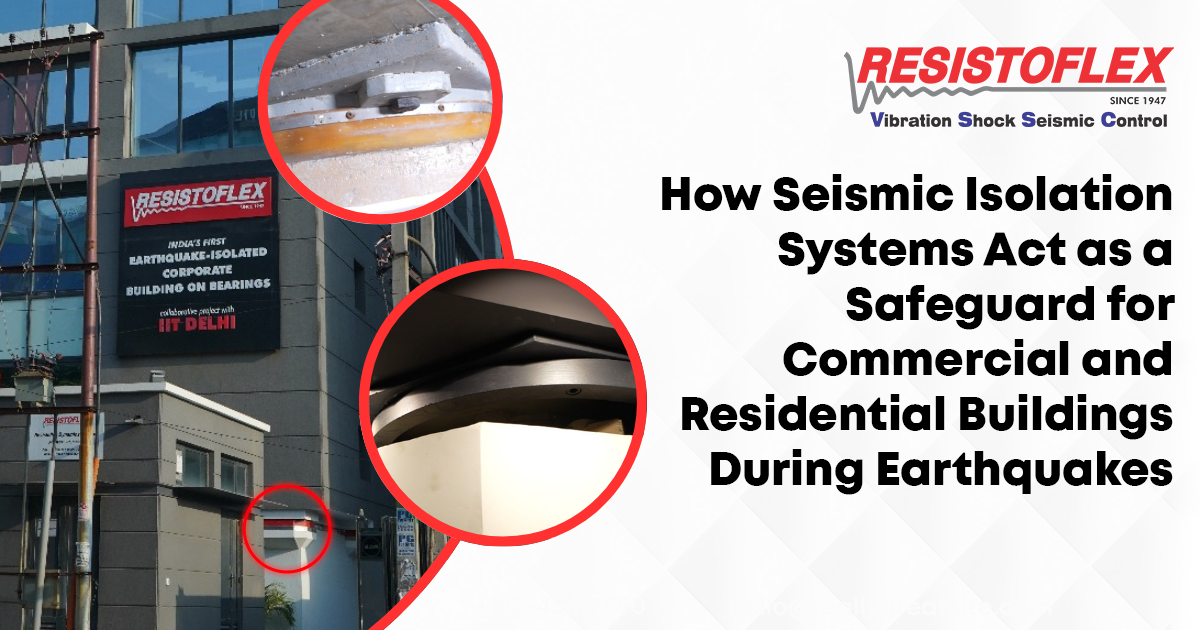
In their Showcase Building in Noida, Resistoflex demonstrates seismic isolation in action. The project integrates base isolation under the structure and isolators for services like lifts, staircases, and conduits, ensuring continued operations during seismic events.
6. Advantages of Buildings Equipped with Seismic Isolation Systems
- Operational Continuity: Essential services remain fully functional post-earthquake.
- Asset Protection: Reduces damage to sensitive internal systems, like medical devices and HVAC.
- Cost Savings: Minimizes downtime and repair expenses compared to conventional retrofits.
7. Expertise & Support from Resistoflex
Resistoflex's Knowledge Centre is a hub for guidance on base isolation design, installation, and best practices. Their team offers support throughout the project lifecycle - from initial diagnostics to post-install monitoring.
8. Resistoflex Seismic Restraint Mounts
SRSM products feature:
- Durable steel frames with epoxy coatings and corrosion-resistant bolts.
- Helical steel springs with 25-50 mm deflections and 50% overload capacity.
- Rubber snubbers to prevent metal contact while allowing vibration isolation.
- Adjustable vertical stops and acoustic seating pads
Ideal for heavy HVAC units, chillers, boilers, compressors, and more.
9. Installation & Maintenance
Resistoflex provides end-to-end services including:
- Structural performance analysis
- Custom isolator design
- Precision installation
- Functional testing
- Ongoing monitoring and maintenance
This ensures the longevity and performance of seismic protection systems.
Conclusion
For building infrastructure, seismic isolation is not just an innovation—it's a necessity. Resistoflex engineered solutions—base isolators, seismic restraints, and ongoing expert support—ensure that essential structures remain secure and functional during earthquakes.
In summary, Resistoflex seismic isolation systems deliver resilience, safety, and peace of mind, keeping essential buildings operational when they are needed most. Want to explore designing your seismic protection? Just contact the experts at Resistoflex!
Frequently Asked Questions
Q1: What's the difference between a pendulum isolator and a rubber bearing?
Pendulum isolators use sliding motion to decouple ground movement, while lead rubber bearings absorb energy via deformation. Both reduce seismic forces, but behave differently under load.
Q2: Can base isolation systems be retrofitted to existing buildings?
Yes—with proper structural assessment, isolators can be integrated under your building or beneath service systems via foundation modifications.
Q3: How often should seismic isolation systems be inspected?
Regular inspections (annually or biennially) are advised to check bearings, snubbers, and overall system integrity.
Q4: Will retrofitting interrupt building operations?
There may be temporary disruptions, but systems can be installed in phases or around essential services to minimize downtime.
Q5: Are these solutions cost-effective?
Though initial investment is higher, the long-term savings on repairs and downtime make base isolation a financially prudent strategy.
Q6: Do seismic restraint mounts protect HVAC units during quakes?
Absolutely. SRSMs secure HVAC systems, piping, and sensitive equipment to prevent displacement and damage during seismic events.