


Why Suspension Technology Is Critical for India’s High-Speed Railways
Introduction
When we think of India’s first bullet train project, most of us imagine sleek white coaches racing past fields at lightning speed, cutting travel hours into minutes. It’s exciting, futuristic, and a big step toward modernizing our transport system. But behind the speed lies a hidden hero that rarely gets attention: the suspension system.
It’s one of the most important factors that will decide whether India’s high-speed rail (HSR) network is safe, reliable, and comfortable. Running a train at 300 km/h is not the same as running one at 110 km/h—and suspension is what makes that difference manageable.
What Is Suspension in Trains?
Think of the last time you sat in a car. When the road had bumps, the suspension absorbed most of the shock, so you weren’t tossed around. Trains work the same way - only at much higher stakes.
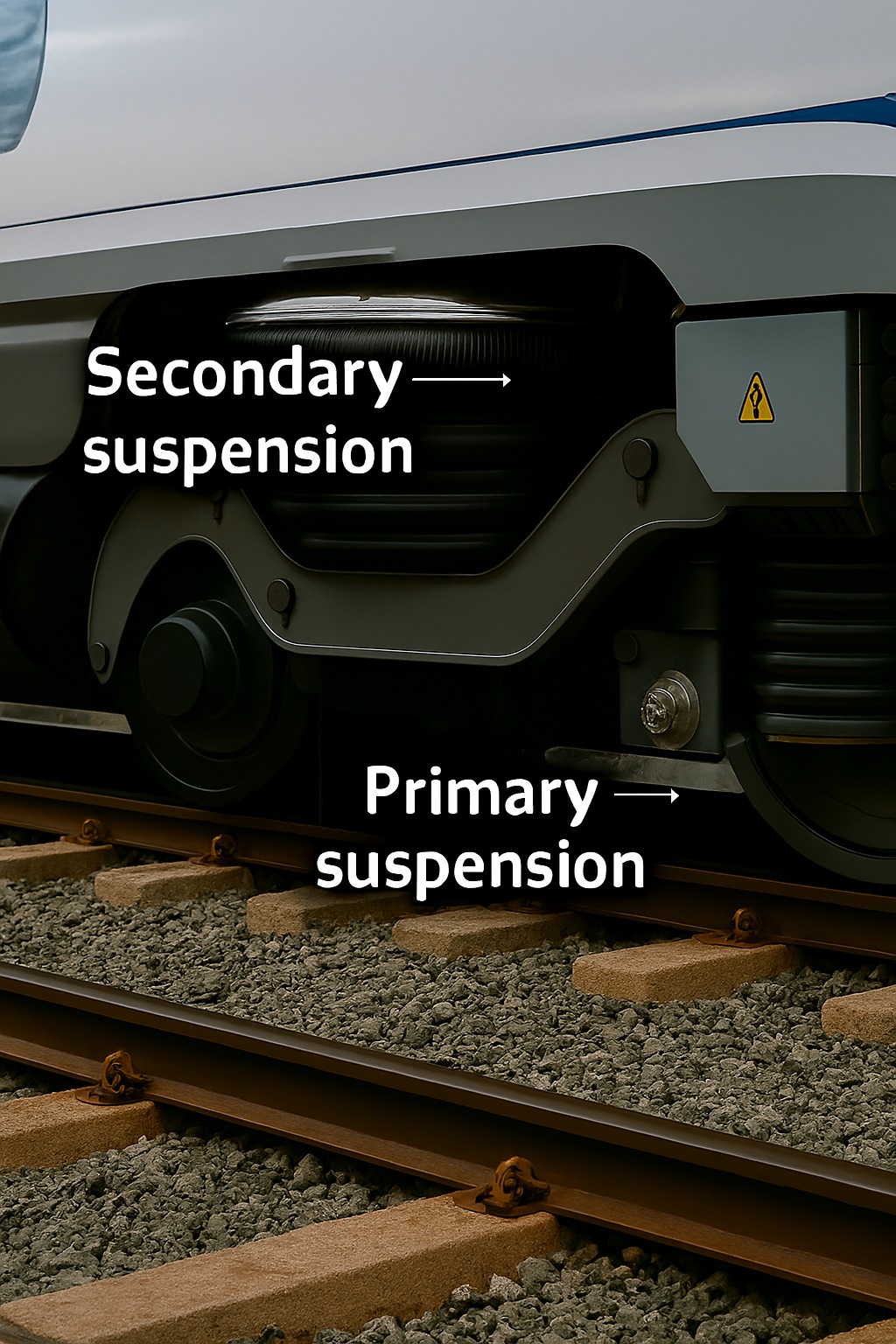
- Primary suspension: Between wheels and bogie, absorbing small jolts and irregularities.
- Secondary suspension: Between bogie and coach, stabilizing the ride and reducing sways at high speeds.
Modern trains use a two-stage system:
In short, suspension is the invisible cushion that decides whether a train journey feels smooth or shaky.
Why Suspension Matters for High-Speed Rail
At 300 km/h, every detail is magnified:
- Tiny flaws = Big problems: A small track bump negligible at 100 km/h becomes a major jolt.
- Safety margins shrink: Faster speeds mean less time to recover from wheel slip or imbalance.
- Passenger comfort is critical: No one will pay premium fares for a rough ride. A strong suspension ensures passengers can sip tea, work on laptops, or nap peacefully even at airplane-like speeds.
Without world-class suspension, high-speed trains simply cannot be “high speed.”
India’s Unique Challenge
Unlike Japan or France, India’s system faces special hurdles:
- Climate extremes: From 45°C summers to heavy monsoon rains—suspension must work in all conditions.
- Varied ground conditions: The Mumbai–Ahmedabad line passes through coastal areas, rivers, and seismic regions.
- Integration with existing rail: Transition points between new and old infrastructure require adaptable suspension.
India cannot simply copy-paste another country’s solution. Our suspension needs tuning to local realities.
Lessons from Global Leaders
- Japan’s Shinkansen: Uses advanced air springs to reduce lateral sway, ensuring stability even at 320 km/h.
- France’s TGV: Relies on pneumatic and hydraulic systems for smooth rides across varied terrains.
- China’s Shanghai maglev line: Employs active suspension with sensors and actuators for real-time adjustments.
These systems serve as valuable references, but India must customize for its climate and geography. This is where engineering companies like Resistoflex bring value, developing advanced air spring and suspension solutions designed for demanding Indian conditions.
More Than Comfort: The Wider Benefits
- Track and wheel protection: Less wear-and-tear saves billions over decades.
- Passenger trust: A smooth ride builds confidence and makes bullet trains more attractive than flying or driving.
- Industrial growth: Manufacturing suspension systems in India strengthens local expertise and creates new opportunities.
- Global image: A successful HSR backed by advanced suspension shows India as a contributor to rail innovation.
The Human Side
Picture this: you’re on the Mumbai–Ahmedabad bullet train, quietly sipping coffee as fields blur past. Inside, the ride feels calm, almost like sitting in an office. That comfort is suspension at work. Without it, the trip would be noisy and stressful. With it, you feel the future of travel.
The Road Ahead
The Mumbai–Ahmedabad line is just the beginning. Routes like Delhi–Varanasi and Mumbai–Nagpur are already in planning. Getting suspension right now will set the standard for every project that follows.
While collaboration with Japan brings world-class know-how, the real success lies in how India adapts and strengthens its own capacity. Companies such as Resistoflex, by advancing air spring and suspension designs suited to Indian realities, are an important part of this journey.
Final Thoughts
High-speed rail isn’t only about faster journeys—it’s about transforming how we experience travel. Suspension technology may not grab headlines like futuristic train designs, but it is the hidden foundation of speed, safety, and comfort. For India, investing in the right suspension systems is not optional—it’s essential
With contributions from engineering leaders such as Resistoflex, India has the opportunity to combine global expertise with homegrown innovation—delivering a smooth, safe “ride of the future” that millions of passengers can rely on and be proud of.